
COVID-19 is on the verge of becoming endemic but Indian scientists are keeping a close watch on each new variant and the government would continue to maintain a high alert, Union health minister Mansukh Mandaviya has said, underlining that the virus has managed to survive and is going to stay.

'As the Indian economy continues to expand over the next three years, mid- and small-caps should do well as they have higher exposure to the domestic economy than large-caps.'
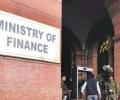
The finance ministry on Wednesday reimposed expenditure curbs on ministries and government departments for July-September quarter. There will be no spending restrictions on the ministries of health, rural development, agriculture, MSME (micro, small and medium enterprises) and railways as part of a two-pronged strategy. "The existing guidelines for expenditure control have been reviewed. "Keeping in view the evolving situation arising out of Covid-19 and anticipated cash position of the government, it is felt essential to regulate Quarterly Expenditure Plan (QEP)/Monthly Expenditure Plan (MEP) of specific ministries/departments for July-September, 2021," the Department of Economic Affairs in the finance ministry said in a notification.
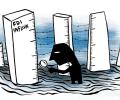
A series of steps taken by the government to promote ease of doing business and liberalisation of foreign direct investment norms have helped India receive record FDI inflows so far this year, and implementation of measures like PM Gati Shakti, single window clearance and GIS-mapped land bank are expected to further push investments in 2022. Notwithstanding the global slowdown and the COVID-19 pandemic, total foreign direct investments into India rose to a record $81.72 billion in 2020-21. During April-July this fiscal, FDI (foreign direct investment) into the country increased by 62 per cent to $27.37 billion.

The Centre is pushing for bilateral trade with Cuba and its settlement in rupee as a part of its strategy to internationalise the domestic currency. A delegation from Cuba, including officials from its central bank, met Indian government officials and banks last month to discuss bilateral trade and settlement using the Reserve Bank of India's (RBI's) payment mechanism in rupee, said people aware of the matter. Since the Cuban nation has opened up its economy and is looking to implement reforms to attract investments from India, Cuban banks have evinced interest in opening special rupee vostro accounts (SRVAs) with Indian banks.
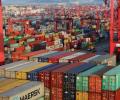
Shipments from Russia rose nearly 33 per cent to $1.1 billion in March from $831.17 million in the previous month, which was when the country mounted aggression on Ukraine and faced sanctions from Western nations, the data accessed by Business Standard shows. Growth in imports was largely on account of oil, people aware of the matter said. The Department of Commerce is learnt to have written to the Ministry of Petroleum and Natural Gas (MoPNG), seeking details of imports, including the payment mechanism, which India has not made public.

The guidelines listed several services including government and private offices that will be out of bounds during the period, while exempting establishments such as hospitals, ration shops, dairies, banks, insurance offices, and print and electronic media. Delivery of all essential goods including food, pharmaceuticals, medical equipment through e-commerce has also been exempted from the purview of the lockdown.

Artificial shortages and brazen hawking of the drug on the streets at 15 times the normal price rule the day as the official machinery tries desperately to stamp out the parallel market, reports Sohini Das

India will export anti-malarial drug hydroxychloroquine, high in demand globally, only to foreign governments and not to private companies, as the product is under prohibited or banned category of exports, sources said. Although exports of this medicine is completely banned, India has decided to export this anti-malarial drug in sync with its global commitment to deal with the coronavirus pandemic.
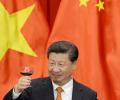
The data leak obtained by 'The Australian' newspaper has revealed how the alleged CPC members are employed with some of the world's biggest corporations in the areas of defence, banks and pharmaceutical giants manufacturing coronavirus vaccines.

With the world's worst outbreak of COVID-19 severely straining the health system in the country, the government has made sweeping changes in the way departments procure medical supplies, including allowing procurement of the same item at different rates.

Patients and pregnant women, people out to buy essential items, and those travelling to or from railway stations, bus stops and airports will be exempted from the night curfew that kicks in at 11 pm on Monday due to rising COVID-19 cases in Delhi, according to a DDMA order.

The free trade agreement (FTA) talks with India are no longer working towards a Diwali deadline though negotiations are progressing well, UK Trade Secretary Kemi Badenoch has said as New Delhi expressed confidence on Friday of an "early date" for a mutually beneficial deal. "There are ongoing negotiations as we know on the FTA. There is interest on both sides to see if we can work towards a deal, an FTA, that is beneficial to both the countries at an early date," external affairs ministry spokesperson Arindam Bagchi told reporters in New Delhi. It came as External Affairs Minister S Jaishankar spoke to his UK counterpart, James Cleverly, and referenced the Roadmap 2030 bilateral agreement signed between Prime Minister Narendra Modi and former UK PM Boris Johnson in May last year, with no specific reference to the FTA.

It is understood that India's border row with China figured in the talks between Foreign Secretary Harsh Vardhan Shringla and US Under Secretary of State for Political Affairs David Hale though there was no mention of it in the press statements issued by the two sides.

The smaller players in the business - combined under the Small Pharmaceutical Industries Confederation - have raised objections to the proposed Uniform Code of Pharmaceutical Marketing Practices.

During the meeting, scheduled to be held through video conference at 6 pm on Tuesday, the Department of Biotechnology will make a presentation and also coordinate with all the participants, sources added.
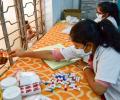
'There is no shortage of any APIs (active pharmaceutical ingredients) in the country'

The transition of Class A and Class B medical device makers to the licensing regime by October 1 seems to be an uphill task with several small and medium manufacturers saying they are still awaiting the audit from the government authorities. If the licenses don't come through, either due to lack of audits or MSME units not clearing the audits, then a few thousand small-scale medical device units will face the issue of business continuity in three weeks. Class A medical devices are those with low to moderate risk to the patient or user (surgical dressings for example), while Class B medical devices refer to devices with moderate risks that require special controls (catheters for example).
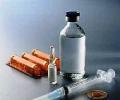
Department of Pharmaceuticals asks NPPA to review Eli Lilly product prices.

'The Centre is planning to procure five million vials of Remdesivir ahead of the third wave. What's better is that this time, the government is paying us in advance,' said a senior executive of a Mumbai-based pharma player which makes Remdesivir. Sohini Das reports.

The pharmaceutical companies may suffer sales loss of Rs 3,000 crore (Rs 30 billion) if the government's span of control increases, as proposed in the new pricing policy for the medicines, a section of the industry said on Monday.
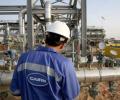
The levy of retrospective tax on the UK's Cairn Energy Plc is a tale of bizarre twists and turns that saw its attached shares being sold in May 2018 amid the passing of the baton from a full-time finance minister to interim one and the talks at the highest level to resolve the dispute, to claims that levy of back taxes was a result of an investigation into Panama Papers leak. The government late last month refunded about Rs 7,900 crore it had collected from selling residual shares of the British firm in its erstwhile India unit, seizing dividend and withholding tax refunds, to settle an eight-year-old dispute that had tarred the country's reputation as an investment destination. But, this did not come about easily. For seven years, the establishment vehemently justified in courts and outside seeking of Rs 10,247 crore in back taxes plus interest and penalty from a firm that gave India its biggest onshore oil discovery.

India's medical devices imports surged 41 per cent to touch Rs 63,200 crore in 2021-22, led by a 48 per cent year-on-year (YoY) jump in imports from China to Rs 13,538 crore, the commerce ministry data analysed by the Association of Indian Medical Device Industry (AiMeD) has showed. Local industry players say this has led to several small and medium units to shut shop. Rakesh Vaid of Usha Fabs, a garments exporter, had started making N95 masks in his Gurgaon factory during the peak of the Covid-19 pandemic.

Pfizer's chief executive Dr Albert Bourla told the BBC that he is of the view that annual vaccinations would be needed to maintain a "very high level of protection" against the deadly disease that has claimed over five million lives across the world.

Concerned over the recent takeover of some firms by MNCs, the domestic pharmaceutical industry has asked the government to protect and promote it by making available funds for research and development.
The teams were from Gennova Biopharmaceuticals Ltd Pune, Biological E Ltd Hyderabad and Dr Reddys Laboratories Ltd Hyderabad.

A panel led by the secretaries of the DEA and the DIPP would conduct a quarterly review on the pending proposals.
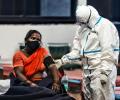
In addition, 22,533 'Make in India' ventilators have been delivered to various states, Union territories and central institutions, the ministry said, adding that the Centre is also ensuring the installation and commissioning of the machines.
The situation is severe in North India as most of the logistics operation was manned by migrant labourers from Uttar Pradesh and Bihar. The problem with manpower is not only in courier and delivery services, but also at a shop level.

The Indian government has paid Cairn Energy Plc Rs 7,900 crore to refund taxes it had collected to enforce a retrospective tax demand, ending a seven-year-old dispute that had tarred the country's image as an investment destination. The company, which is now known as Capricorn Energy PLC, in a statement said it has received "net proceeds of $1.06 billion", of which nearly 70 per cent will be returned to the shareholders. The tax department had used a 2012 legislation, which gave it powers to go back 50 years and slap capital gains levies wherever ownership had changed hands overseas but business assets were in India, to seek Rs 10,247 crore in taxes from Cairn.

The department of pharmaceuticals turned down a review petition by drugmaker Cipla against a price fixation order by the National Pharmaceutical Pricing Authority, slashing the price of Dytor Plus, a medicine for kidney and heart ailments.

Rediff reader Someshwar Shinde reveals how he landed his first job.

The government hopes that the PLI schemes would provide 200,000-300,000 direct employment over five years, according to sources in the know.


The fire broke out after a blast at United Phosphorus Ltd's plant in Jhagadia GIDC industrial area, said inspector P H Vasava of the local police station.

Sadananda Gowda, the minister, also Bengaluru North MP, drove off in an official car with out undergoing institutional quarantine as mandated by the Karnataka government for air travellers coming from high COVID-19 prevalence states after arriving by a commercial airline flight, services of which resumed after two months.
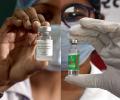
Several states and UTs including Delhi, Maharashtra, Karnataka and Telangana have decided to opt for global tenders for procurement of anti-coronavirus shots with the domestic supply falling short to meet the rising demand.

These items will remain under essential commodities segment till June-end, a move aimed at ensuring availability at reasonable prices and cracking down on hoarders/black marketeers.
Britain's Cairn Energy Plc has dropped lawsuits against the Indian government and its entities in the US and other places and is in the final stages of withdrawing cases in Paris and the Netherlands to get back about Rs 7,900 crore that were collected from it to enforce a retrospective tax demand. As part of the settlement reached with the government to the seven-year old dispute over levy of back taxes, the company - which is now known as Capricorn Energy PLC - has initiated proceedings to withdraw lawsuits it had filed in several jurisdictions to enforce an international arbitration award which had overturned levy of Rs 10,247 crore retrospective taxes and ordered India to refund the money already collected. Two sources with direct knowledge of the matter said Cairn on November 26 withdrew the lawsuit it had brought in Mauritius for recognition of the arbitration award and took similar measures in courts in Singapore, the UK and Canada.
